Winning a Bid
Last updated: November 7, 2026
What this is
What goes into a bid, how your price is set at allocation, and how to win more campaigns over time.
Key takeaway: Base your bid on the TAL, not just the audience filters: every validation and audit runs against the TAL. Enter your Max Avails, a Standard CPE, and a Discounted CPE. Prices are net: what you bid is what you receive.
What you submit in a bid
Important: All bids must be based on the TAL in the RFP, not on the audience filters alone. All future lead validation and audits run against the TAL, so your committed volume must reflect how well you actually cover those accounts.
Your bid includes:
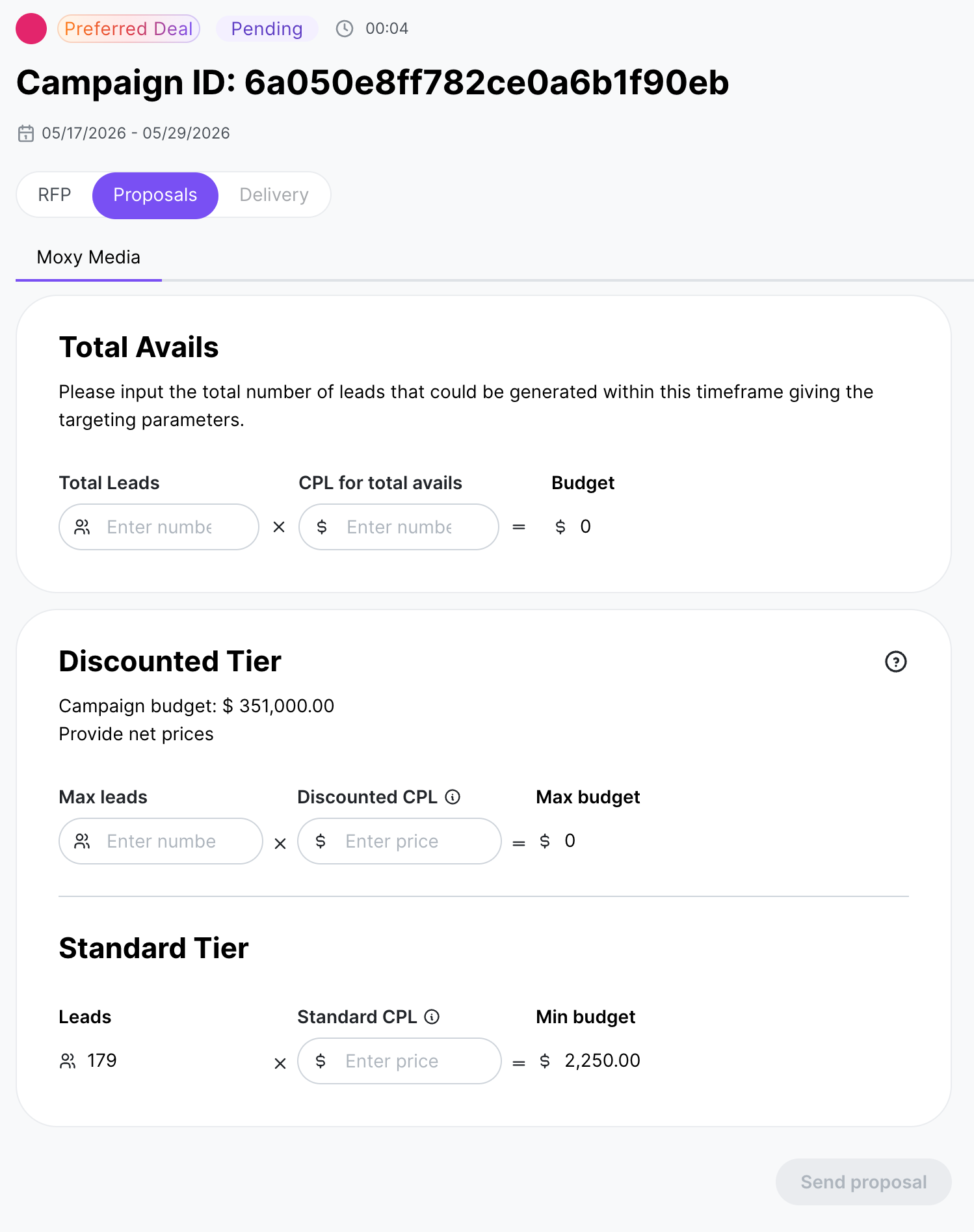
Max Avails: the most leads you can deliver against the campaign requirements within the campaign dates.
Standard CPE: your price at the minimum delivery tier. The platform works out the minimum lead count from this rate.
Discounted CPE: your price at the maximum delivery tier. This rate applies when the advertiser allocates budget closer to your max avails.
Engagements per lead (multi-touch campaigns only): the number of engagements you'll deliver per contact.
Note: Your CPE is a price per engagement, not per contact. An engagement is one time a lead engages with a piece of the advertiser's gated content. On multi-touch campaigns, one lead may need several engagements to qualify, so a lead is worth your CPE × its engagements.
Price your bids with that in mind.
Note: All prices on Audyence are net. The amount you bid is the amount you receive per lead or engagement, based on your allocation.
How pricing works at allocation
Your bid sets a price range between your standard and discounted rates. At allocation:
If the budget allocated to you is closer to your max avails, your effective CPE is closer to your discounted rate.
If it's closer to your standard tier, your effective rate is closer to your standard rate.
The platform calculates your rate based on where the allocated volume falls within your committed range.
Transactional deals
Besides the standard RFP/auction process, qualifying publishers may take part in other deal types. For how Preferred Deals and Programmatic Guaranteed work, what you get as a publisher, and how auto-allocation and price caps apply, see Preferred Deals for Publishers.
Tip: Interested in either deal type? Contact your Audyence account manager.
How to win more campaigns over time
Keep rejection and return rates low: map the targeting requirements, validate emails and phone numbers, and fix rejects quickly to stay on pace.
Keep your publisher profile accurate so RFP matching reflects what your audience can really do.
Bid consistently on campaigns that fit your audience instead of bidding on every RFP.
Warning: A Returned lead must be replaced within 7 business days. If you have Queued leads, they're moved up automatically to fill the gap.